Coffee is more than a crop in Uganda—it’s the backbone of rural economies and a lifeline for millions of families. As Africa’s largest coffee exporter, Uganda’s coffee industry generates substantial economic benefits that ripple through communities, from smallholder farmers to urban traders.
Coffee’s Role in Uganda’s Economy
National Economic Contribution
Coffee consistently ranks among Uganda’s top export commodities:
- Export earnings: Coffee generates over $800 million annually in foreign exchange
- GDP contribution: The coffee sector contributes approximately 3-4% to Uganda’s GDP
- Employment: Over 1.7 million households depend directly on coffee production
- Secondary employment: Millions more work in processing, trading, and export services
Regional Economic Driver
Coffee production creates economic ecosystems in growing regions:
- Mount Elgon region: Arabica production drives local economies in Bugisu
- Central Uganda: Robusta cultivation supports communities around Lake Victoria
- Western highlands: Emerging specialty coffee regions create new opportunities
- Rwenzori Mountains: Premium Arabica farming generates higher incomes
Impact on Smallholder Farmers
Income Generation
For Uganda’s 1.7 million coffee-farming households, coffee provides:
- Primary income source: Coffee accounts for 60-80% of cash income for many families
- Seasonal cash flow: Harvest payments fund school fees, healthcare, and investments
- Women’s economic participation: Female farmers increasingly control coffee income
- Youth employment: Coffee farming provides opportunities for young people
Improved Living Standards
Coffee income translates to measurable quality-of-life improvements:
- Housing: Farmers invest in permanent structures and home improvements
- Education: Coffee payments fund children’s school fees at all levels
- Healthcare: Families access better medical care and nutrition
- Agricultural inputs: Reinvestment in farming improves future yields
Community-Level Economic Benefits
Infrastructure Development
Coffee-producing regions experience enhanced infrastructure:
- Road networks: Coffee trade drives demand for better transportation
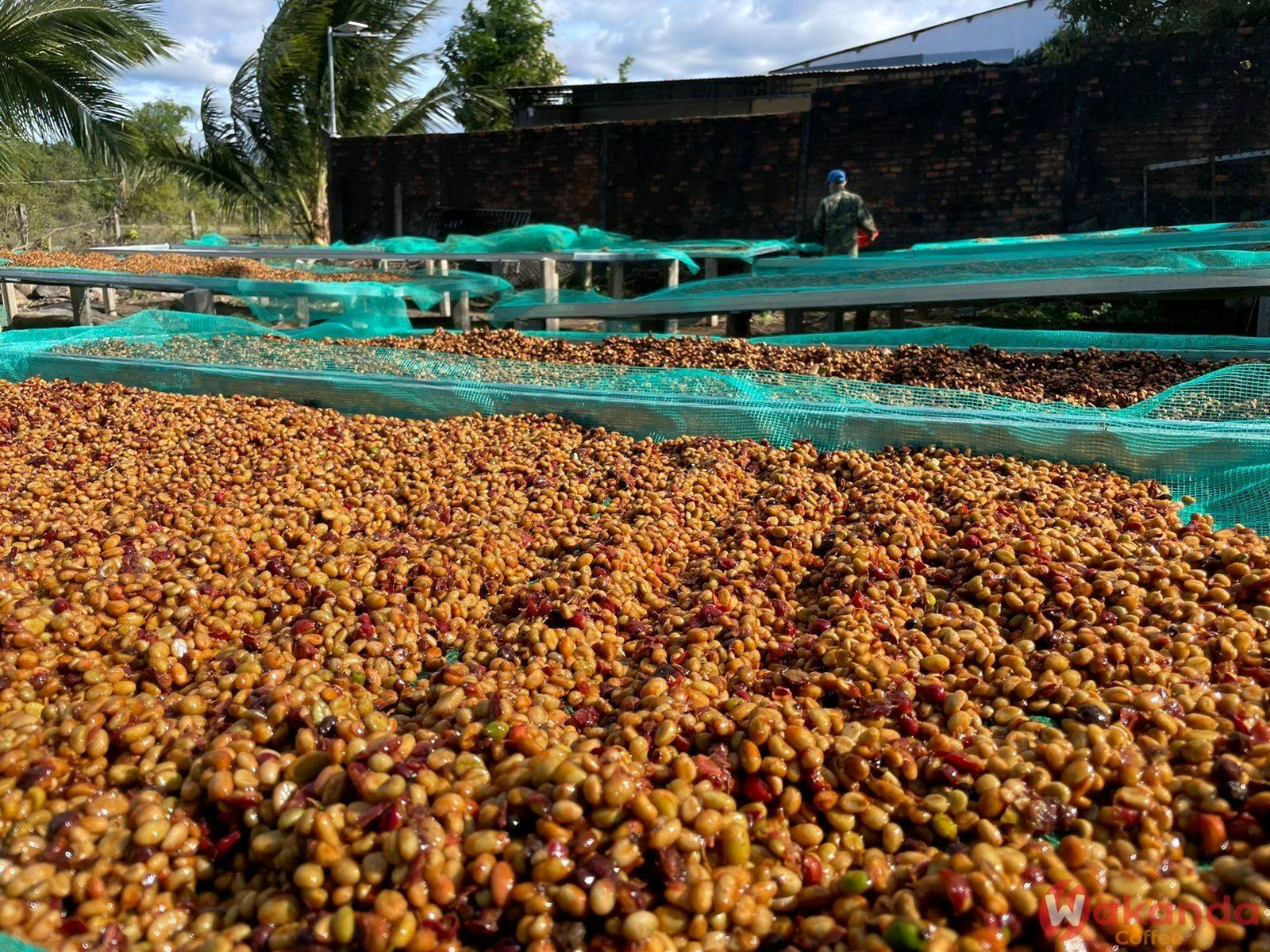
- Processing facilities: Washing stations and hulling mills create local employment
- Storage facilities: Warehouses protect harvests and stabilize prices
- Market centers: Trading points become commercial hubs
Service Sector Growth
Coffee economies support diverse service providers:
- Input suppliers: Fertilizer and agrochemical distributors
- Transportation: Trucking and logistics services
- Financial services: Mobile money and microfinance expand
- Trade services: Brokers, exporters, and certification bodies
The Multiplier Effect
Local Economic Circulation
Coffee income circulates through local economies:
- Direct spending: Farmers purchase goods and services locally
- Employment creation: Local businesses hire additional workers
- Business investment: Entrepreneurs start new ventures
- Tax revenue: Government receives funds for public services
Studies suggest that every dollar earned from coffee generates $2-3 in local economic activity through multiplier effects.
Value Chain Employment
Beyond farming, coffee creates jobs across the value chain:
| Value Chain Stage | Employment Type | Estimated Jobs |
|---|---|---|
| Production | Farmers, laborers | 3+ million |
| Processing | Mill workers, sorters | 100,000+ |
| Trading | Brokers, agents, transporters | 50,000+ |
| Export | Documentation, logistics, inspection | 20,000+ |
Challenges Facing Coffee Communities
Price Volatility
Fluctuating global coffee prices create economic instability:
- Income uncertainty makes planning difficult
- Low prices force farmers to reduce investments
- Extreme volatility can push families into poverty
Climate Change Threats
Changing weather patterns jeopardize coffee production:
- Shifting rainfall affects yields and quality
- Rising temperatures push viable growing zones higher
- Pest and disease pressure increases
Infrastructure Gaps
Limited infrastructure constrains economic benefits:
- Poor roads increase transportation costs
- Inadequate storage leads to post-harvest losses
- Limited processing capacity reduces value capture
Strategies for Maximizing Economic Impact
Quality Improvement Programs
Investing in quality yields higher returns:
- Premium prices for specialty-grade coffee
- Direct trade relationships with international buyers
- Certification premiums (organic, Fair Trade, Rainforest Alliance)
Value Addition
Processing coffee locally captures more value:
- Wet processing (washing) commands premium prices
- Roasting for domestic and regional markets
- Packaging and branding for export
Cooperative Development
Farmer organizations strengthen economic position:
- Collective bargaining power
- Shared processing infrastructure
- Access to finance and training
- Direct market linkages
The Future of Coffee Economics in Uganda
Growing Specialty Sector
Uganda’s specialty coffee segment shows strong growth:
- Increasing recognition of Ugandan coffee quality
- Direct trade relationships expanding
- Higher prices for traceable, quality coffee
Government Support
Policy initiatives support coffee sector development:
- National Coffee Development Authority programs
- Export promotion and market development
- Research and extension services
Private Sector Investment
Commercial investment modernizes the sector:
- Processing facility upgrades
- Technology adoption
- Sustainability certifications
Conclusion
Coffee remains central to Uganda’s rural economy, supporting millions of livelihoods and driving community development. While challenges persist, investments in quality, infrastructure, and farmer capacity continue to strengthen the positive economic impact of Uganda’s coffee sector on communities throughout the country.
Keywords: Uganda coffee economy, coffee farming Uganda, coffee economic impact, Ugandan coffee communities, smallholder coffee farmers, coffee livelihoods, East African coffee economics
Meta Description: Explore how coffee cultivation transforms Ugandan communities. Learn about the economic impact on smallholder farmers, local businesses, and regional development across Uganda’s coffee-growing regions.