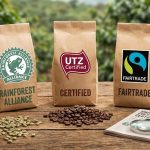
Coffee certifications help buyers identify products meeting specific environmental, social, or quality standards. For producers, certifications open doors to premium markets. For buyers, they provide verified assurance of sustainable practices. This guide explains the major coffee certification programs and their requirements.
Why Coffee Certifications Exist
Market Demands
Consumers increasingly want:
- Ethically sourced products
- Environmental sustainability
- Transparent supply chains
- Quality assurance
Producer Benefits
Certifications offer farmers:
- Access to premium markets
- Price premiums and stability
- Technical assistance and training
- Improved farming practices
Supply Chain Trust
Certifications provide:
- Third-party verification
- Standardized requirements
- Traceability throughout the chain
- Reduced due diligence burden
Major Coffee Certifications
Rainforest Alliance Certified
Focus: Environmental sustainability and social responsibility
Key Requirements:
- Ecosystem conservation and wildlife protection
- Water and soil conservation practices
- Waste management and pollution prevention
- Worker rights and community relations
- Farm management systems
Standard Highlights:
- Prohibits deforestation of primary forests
- Requires shade tree maintenance
- Mandates integrated pest management
- Ensures safe working conditions
Market Position:
- Widely recognized consumer-facing certification
- Strong in European and North American markets
- Merged with UTZ in 2018 (unified standard from 2020)
UTZ Certified (Now Part of Rainforest Alliance)
Historical Focus: Good agricultural practices and traceability
Legacy Contributions:
- Strong traceability systems
- Emphasis on farmer training
- Yield improvement focus
- Accessible entry requirements
Transition:
- Programs merged in 2020
- Existing UTZ certificates honored through transition
- Single Rainforest Alliance standard now applies
Fairtrade/Fair Trade
Focus: Fair prices and community development
Key Requirements:
- Minimum price guarantees
- Social premium payments
- Democratic farmer organizations
- Environmental standards
- Labor rights protection
Price Structure:
- Minimum price: Floor price for certified coffee
- Premium: Additional payment for community development ($0.20/lb for coffee)
- Organic differential: Extra for organic certified
Market Position:
- Strong consumer recognition
- Focus on smallholder farmer benefits
- Requires cooperative or association structure
Organic Certification
Focus: Chemical-free production
Key Requirements:
- No synthetic pesticides or fertilizers
- No GMO crops
- Soil building practices
- Buffer zones from conventional farms
- Documented management practices
Major Organic Standards:
- USDA Organic: Required for US market
- EU Organic: Required for European market
- JAS Organic: Required for Japan
- Others: Various national standards
Certification Process:
- Three-year conversion period
- Annual inspections
- Documentation of inputs and practices
- Chain of custody throughout supply chain
Bird Friendly Certification (Smithsonian)
Focus: Shade-grown coffee protecting bird habitat
Key Requirements:
- Minimum 40% shade cover
- Specific canopy structure requirements
- Native tree species requirements
- Organic certification prerequisite
- No chemical inputs
Market Position:
- Niche specialty market
- Highest environmental standards
- Premium pricing for certified coffee
- Limited certified volume available
4C (Common Code for Coffee Community)
Focus: Baseline sustainability
Key Requirements:
- Economic viability practices
- Social conditions
- Environmental management
- No worst practices (child labor, deforestation, etc.)
Market Position:
- Entry-level certification
- Lower cost and complexity
- Often used as stepping stone to other certifications
- Mainstream coffee industry adoption
Comparison of Major Certifications
| Certification | Price Premium | Environmental | Social | Quality | Cost to Farmer |
|---|---|---|---|---|---|
| Rainforest Alliance | Variable | High | Medium | Variable | Medium |
| Fairtrade | Guaranteed | Medium | High | Variable | Medium |
| Organic | Variable | High | Low | Variable | High |
| Bird Friendly | High | Very High | Low | High | High |
| 4C | None | Low | Low | None | Low |
Certification Requirements for Producers
Common Steps to Certification
- Gap assessment: Evaluate current practices against standards
- Implementation: Make required changes to operations
- Documentation: Develop required management systems
- Training: Educate farmers and workers on requirements
- Internal audit: Verify compliance before certification audit
- Certification audit: Third-party inspection
- Corrective actions: Address any non-conformities
- Annual renewal: Maintain certification through ongoing compliance
Costs of Certification
Direct costs:
- Certification body fees
- Audit costs
- Internal management systems
- Training and capacity building
Implementation costs:
- Infrastructure improvements
- Input changes (e.g., switching to organic)
- Record keeping systems
- Time investment
Group Certification
Smallholders often certify through groups:
- Shared certification costs
- Internal control systems
- Collective marketing
- Technical support networks
Certification Benefits for Buyers
Supply Chain Assurance
- Verified sustainable practices
- Reduced reputational risk
- Consumer trust and loyalty
- Simplified due diligence
Marketing Advantages
- On-pack certification marks
- Storytelling opportunities
- Differentiation from competitors
- Access to conscious consumers
Compliance Support
- Meeting retailer requirements
- Corporate sustainability goals
- Regulatory compliance
- Stakeholder reporting
Choosing the Right Certification
For Producers
Consider:
- Market demands from current buyers
- Implementation costs versus premiums
- Current practices and gap size
- Available support and training
For Buyers
Consider:
- Target market preferences
- Supply availability
- Premium budget
- Certification credibility
- Corporate sustainability strategy
Emerging Trends in Certification
Landscape/Jurisdictional Approaches
Moving beyond farm-level certification:
- Regional sustainability initiatives
- Collective impact programs
- Government partnership models
Technology Integration
Digital tools enhancing certification:
- Satellite monitoring for deforestation
- Mobile data collection
- Blockchain traceability
- Remote sensing verification
Climate Focus
Growing emphasis on climate:
- Carbon footprint measurement
- Climate adaptation practices
- Emissions reduction requirements
Conclusion
Coffee certifications serve important roles in promoting sustainability and connecting responsible producers with conscious buyers. Understanding the differences between certifications helps stakeholders make informed decisions about which programs best fit their needs and values. As sustainability becomes increasingly important in coffee, certifications will continue evolving to meet new challenges and expectations.
Keywords: coffee certifications, Rainforest Alliance certified, Fair Trade coffee, organic coffee certification, UTZ certified, coffee sustainability certifications, certified coffee guide
Meta Description: Understand major coffee certifications including Rainforest Alliance, Fair Trade, Organic, and more. Learn requirements, benefits, and how to choose the right certification for your needs.