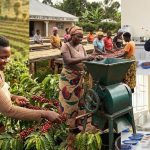
In the world of international coffee trade, brokers play a pivotal role as intermediaries and facilitators. But what exactly does a coffee broker do, and why is their work essential in East Africa? This article demystifies the role and value of a coffee broker.
1. What Is a Coffee Broker?
A coffee broker acts as a middle agent between coffee producers (farmers, cooperatives) and buyers (roasters, exporters, importers). Their functions often include:
- Sourcing coffee
- Negotiating prices and contracts
- Quality assurance & sampling
- Export documentation & compliance
- Logistics coordination
- Risk management
A good broker ensures trust, transparency, and efficiency across the chain.
2. Why Use a Broker?
For Farmers / Cooperatives:
- Access to international buyers and markets
- Better pricing leverage through aggregated volume
- Reduced burden of export paperwork and logistics
- Quality training, lab access, and grading capacity
For Buyers / Roasters:
- Reliable sourcing with traceability
- Consistent quality and specifications
- Reduced risk (document errors, shipment issues)
- Access to origin insight and market intelligence
3. Core Functions of a Broker
- Sourcing & Supplier Management
Identifying credible producers, verifying certifications, ensuring traceability. - Contracting & Price Negotiation
Defining lot parameters, payment terms, incoterms, grade requirements. - Sampling & Quality Control
Coordinating sample collection, lab testing, cupping, grading, and reserve sample retention. - Documentation & Compliance
Preparing export documentation (phytosanitary, origin, quality certificates) and handling custom formalities. - Logistics & Shipment Oversight
Organizing transport (farm to warehouse, port), container loading, shipping coordination, tracking. - Risk Management & Dispute Resolution
Mitigating shipment and quality risk, managing disputes, offering insurance or contingency handling. - Market Intelligence & Advisory
Advising clients on price trends, market demands, varietals, forecasts.
4. Broker vs Exporter vs Trader — Differences
While roles sometimes overlap, differences typically are:
- Broker: Focuses on intermediating between buyer and seller without handling roasting or brand production.
- Exporter / Trading House: May own or control export licensing, shipping, and even branding.
- Trader: Focus on buying & selling commodities; may lack deep field or QA presence.
In East Africa, brokers with local lab, field presence, and export experience are most trusted.
5. What Makes a Good Coffee Broker?
- Strong local networks and relationships
- Laboratory and quality control capacity
- Logistics & export expertise
- Transparent processes and documentation
- Experience with certifications (organic, fair trade, sustainability)
- Market insight and advisory capability
At Wakanda Coffee Brokers, we combine local reach (Uganda, Rwanda, Tanzania, Congo, Burundi) with technical capacity in lab services, logistics, and export compliance.
Conclusion & Call to Action
A coffee broker is more than a middleman—they are quality guardians, logistics engineers, compliance experts, and strategic advisors. Choosing the right broker can elevate your sourcing, reduce risk, and unlock premium markets.
If you’re a producer, coop, or buyer seeking a reliable broker partner in East Africa, let’s talk. Wakanda Coffee Brokers stands ready to deliver sourcing, QA, logistics, and trade support that aligns with your goals.